
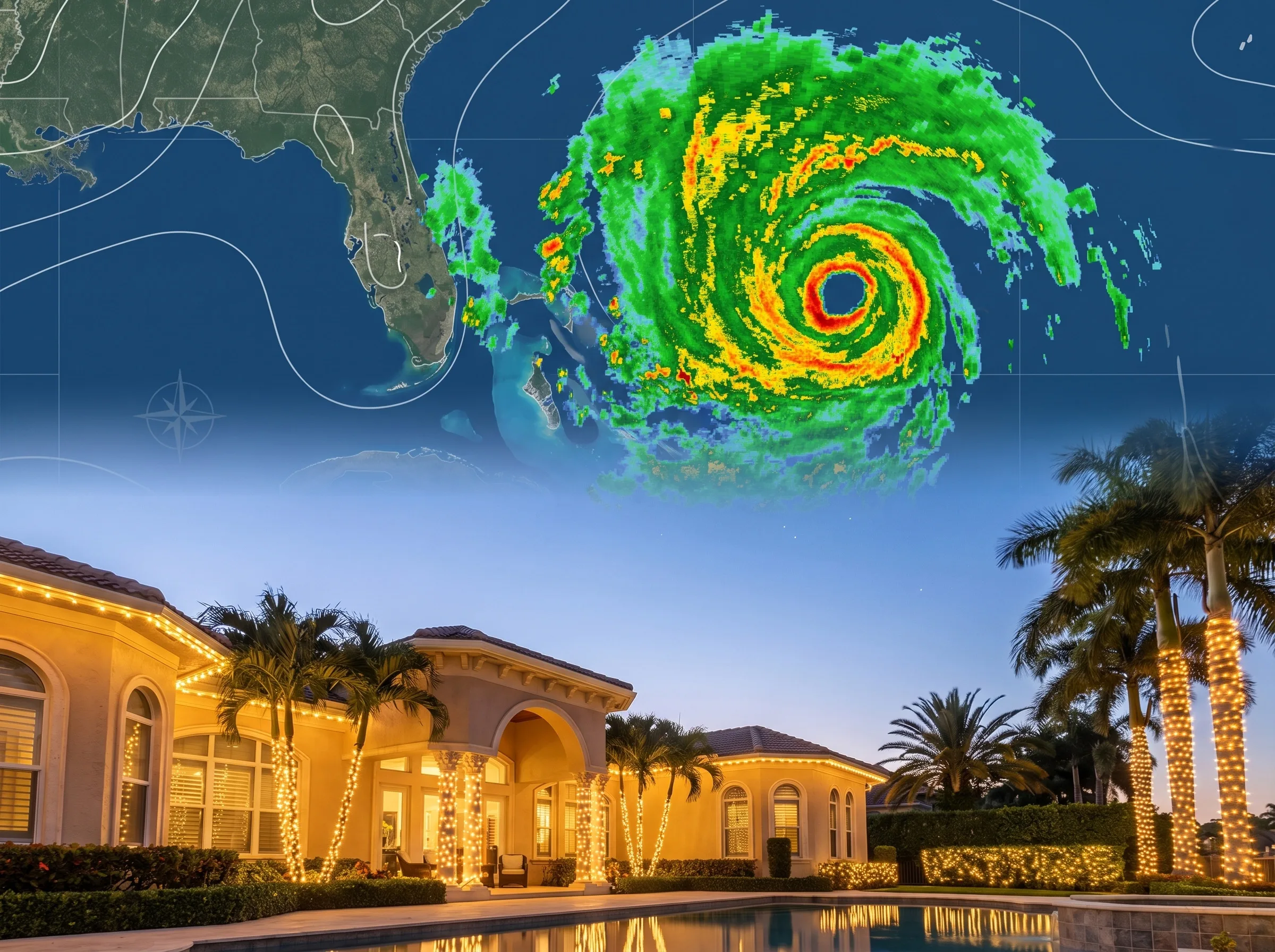
South Florida homeowners live with a scheduling quirk most of the country doesn’t: hurricane season officially runs through November 30, which means it overlaps directly with the start of holiday decorating season. That overlap isn’t just a coincidence to shrug off — it actually shapes when and how you should plan your holiday lighting. For homeowners who moved here from a climate where “holiday prep” simply meant pulling boxes out of the attic, this dual-season reality can take some getting used to. Here’s how to move smoothly from storm-ready mode into a beautifully lit home without redoing work twice.
 Why the Timing Actually Matters
 Why the Timing Actually Matters
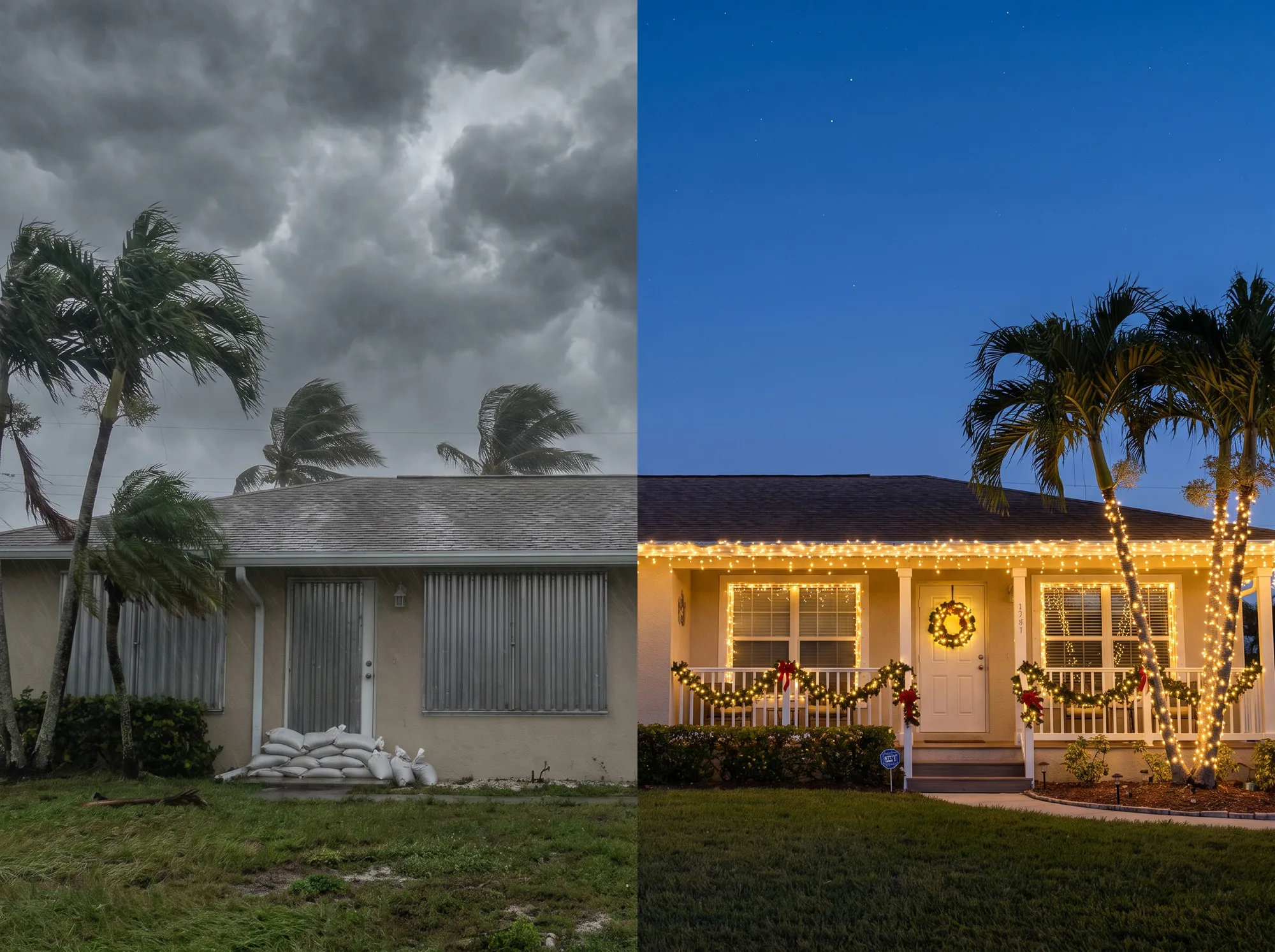
Hurricane season runs June through November, and while the highest-risk stretch is typically August through October, late-season storms in November aren’t unheard of. That means many South Florida homeowners are still mentally (and physically) in storm-prep mode right as the holiday decorating window opens. Installing an elaborate lighting display too early — before storm season has fully wound down — carries real risk of wind or rain damage before you’ve even had a chance to enjoy it.
On the other hand, waiting too long to start planning means competing for a professional installer’s calendar with everyone else who had the same idea, or scrambling to buy materials that are already sold out. The sweet spot for most homeowners is using the last weeks of hurricane season to plan and prepare, then installing once the immediate storm risk has meaningfully dropped.
Step 1: Assess Storm Damage Before You Decorate
Before hanging a single light, do a walkthrough of your home’s exterior. Wind and rain from even a moderate storm can loosen gutters, damage roofing, or weaken fascia boards — all of which are exactly where holiday lights typically get clipped or mounted. Installing lights onto compromised gutters or trim not only risks damaging your display, it can make existing storm damage worse.
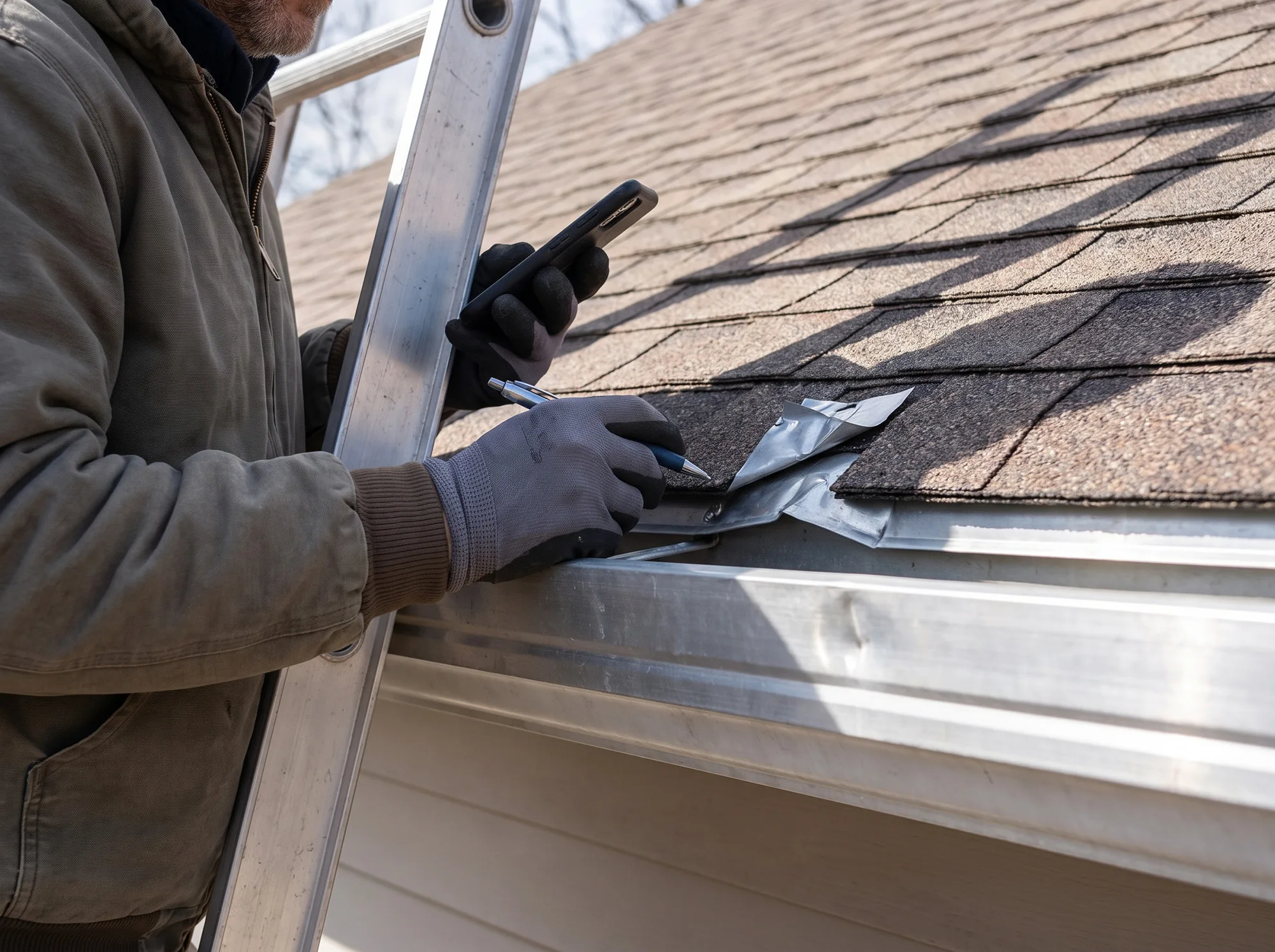 If you find damage, it’s worth repairing it first — both for the integrity of your home and so your lighting has something solid to attach to. This is also a good moment to check that any tree limbs damaged during storm season are trimmed back before you start wrapping palm trees or nearby foliage in lights.
Step 2: Choose Storm-Resistant Materials From the Start
Even after the highest-risk storm window passes, South Florida can still see strong wind gusts and heavy rain well into the holiday season. Materials that hold up best include:
- Sealed, outdoor-rated LED connectors that resist water intrusion
- Heavy-duty clips rather than tape or hooks, which loosen quickly in wind
- UV- and weather-resistant wiring that won’t become brittle after storm-season sun exposure
- Securely anchored extension cords, positioned to avoid standing water during heavy rain
Choosing these materials isn’t just about surviving a late-season storm — it also means less maintenance and a longer-lasting display overall.
Step 3: Have a Plan for Late-Season Storm Watches
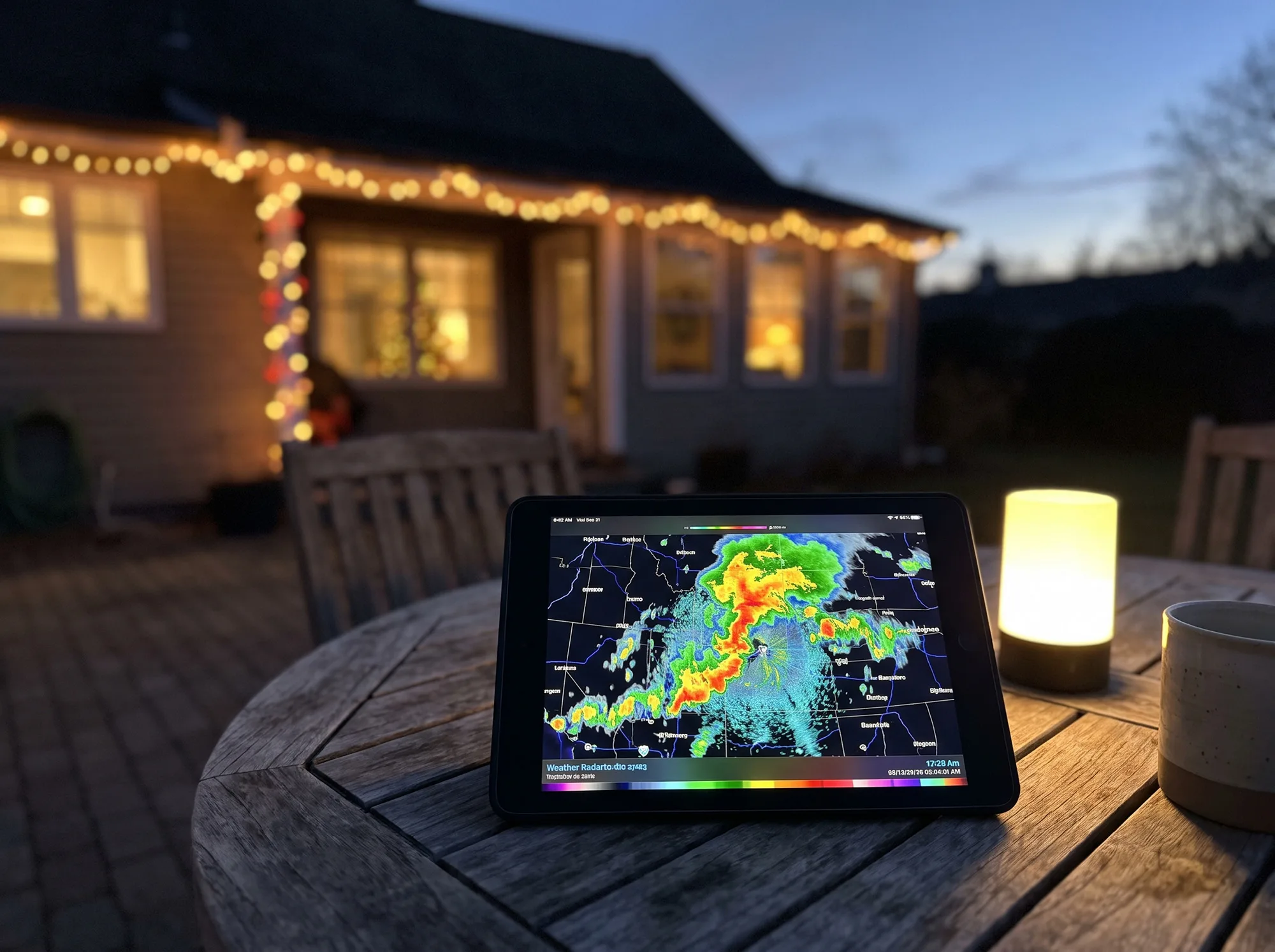
Even after most of hurricane season has passed, South Florida can still see a late tropical system or a strong seasonal storm. If a storm watch or warning is issued while your display is up, a few quick precautions can prevent lost or damaged lighting:
- Secure or temporarily remove any loosely mounted decorations, especially inflatables or freestanding pieces
- Double-check that extension cords and connections are elevated above expected flooding or standing water
- Trim or secure any lit palm fronds that could whip in high wind
- Have a plan to power down and unplug exterior lighting if a storm is expected to bring significant wind or rain
Homeowners who work with a professional installer often have an easier time here, since many companies build storm contingency planning into their service and can help secure or temporarily adjust a display if a late-season system develops.
Step 4: Time Your Installation Strategically
 Step 4: Time Your Installation Strategically
For most South Florida homeowners, late November through early December tends to be the sweet spot — after the highest-risk stretch of hurricane season has passed, but early enough to enjoy the display through the full holiday season. If you’re hiring a professional, this is also typically when demand peaks, so booking a few weeks ahead of your ideal install date helps avoid a rushed or delayed installation.
Homeowners who want an earlier display (right after Halloween, for example) should weigh that against the small but real chance of a late-season storm and choose weather-resistant materials accordingly. It’s also worth checking your specific municipality or HOA guidelines, since some communities in Palm Beach, Broward, and Miami-Dade counties have their own rules about how early seasonal decorations can go up.
Step 5: Consider Permanent Lighting for Year-Round Peace of Mind
One growing trend among South Florida homeowners is permanent, color-changing LED lighting systems that stay installed year-round and are controlled via app. Beyond the convenience of switching colors for different holidays, permanent systems are typically installed with storm-rated hardware from the start, since they’re built to remain in place through hurricane season rather than being put up and taken down annually. That means less exposure to installation risk during a compressed post-storm-season window, and one less thing to think about each fall.
Frequently Asked Questions
 Frequently Asked Questions
Is it safe to install holiday lights before hurricane season officially ends on November 30?
It can be, especially later in November when storm activity has typically dropped off significantly. Keep an eye on any active storm watches or forecasts before installing, and prioritize storm-resistant materials and secure mounting either way.
What should I do with my holiday lights if a storm develops while they’re already installed?
Secure or remove loose decorations, elevate cords away from potential flooding, and consider powering down exterior lighting if significant wind or rain is expected. A professional installer can often help with this if you’re on a maintenance plan.
Does permanent lighting hold up better through storm season than seasonal string lights?
Generally, yes. Permanent systems are typically installed with more secure, storm-rated hardware since they’re designed to stay up year-round, whereas seasonal lights are often mounted with lighter-duty clips meant for temporary use.
Quick Checklist: Storm Season to Holiday Lighting
If you want a simple reference to work from as the season transitions, this covers the essentials:
- Inspect gutters, roofline, and fascia for storm damage before mounting anything
- Trim back any storm-damaged tree limbs or palm fronds near planned lighting areas
- Choose sealed, outdoor-rated connectors and heavy-duty clips over tape or basic hooks
- Time installation for late November through early December when storm risk has typically dropped
- Keep an eye on the forecast during installation week and have a plan to secure or power down lighting if a late-season system develops
- Consider permanent, storm-rated lighting if you want to avoid this seasonal timing question altogether in future years
Working through this list before your display goes up helps make sure the transition from storm prep to holiday cheer is a smooth one, rather than a rushed scramble in early December.
Let Us Handle the Timing for You
Not sure when it’s safe to install, or want a display built with materials that can handle South Florida’s weather? Let’s Get Lit plans installations around storm season and uses commercial-grade, weather-resistant materials from the start. Contact us today for a free consultation.