
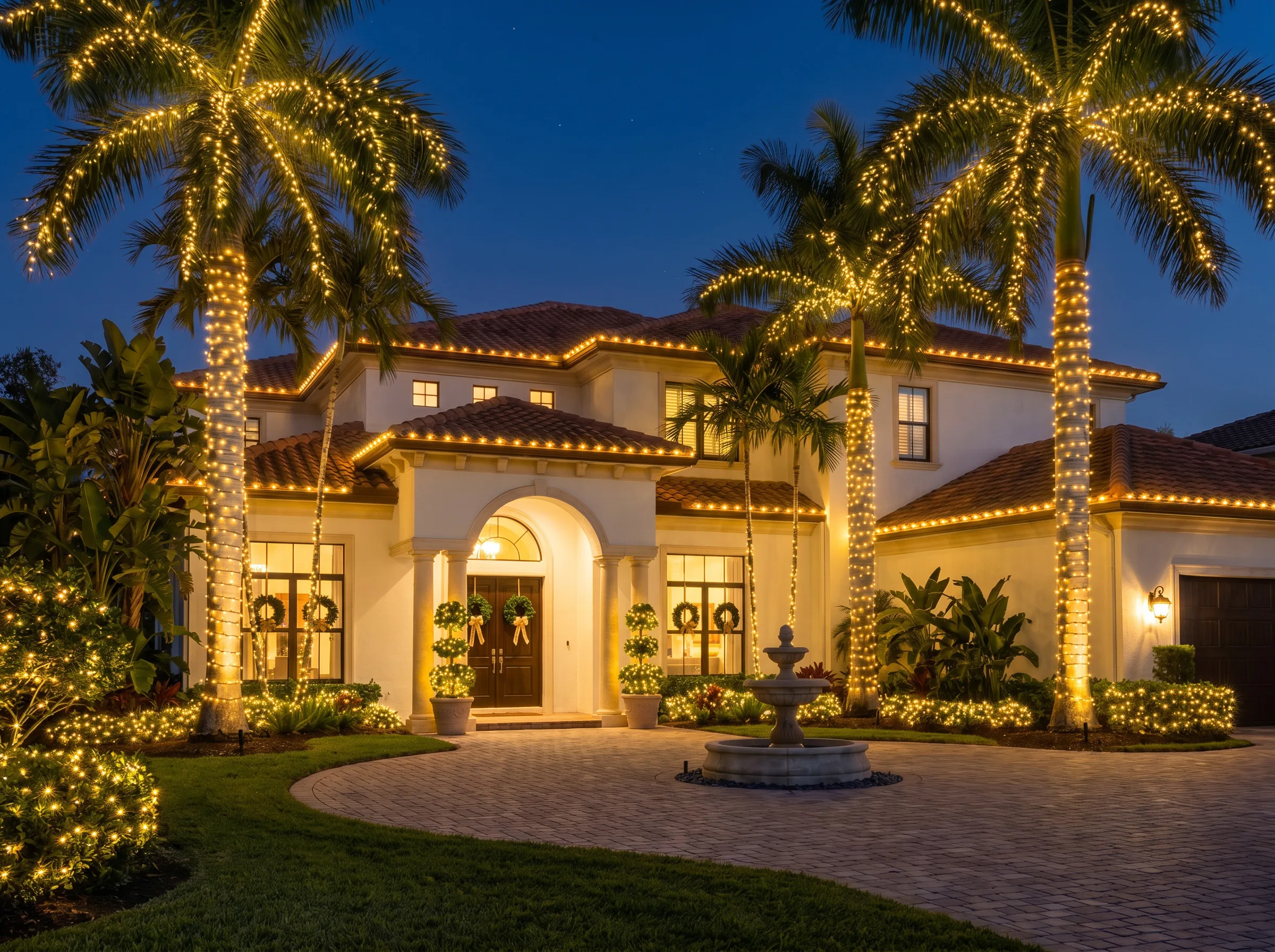
Every year, holiday lighting evolves right alongside home design, and 2026 is no exception. Homeowners are moving away from the tangled string-light chaos of decades past and leaning into curated, designer-level displays that look as good in photos as they do in person. Whether you’re planning your own installation or hiring a professional crew to bring your vision to life, here’s what’s trending in outdoor holiday lighting this season — and how to bring these ideas to your own South Florida home.
 Warm White Is (Still) King — But With a Twist
 Warm White Is (Still) King — But With a Twist
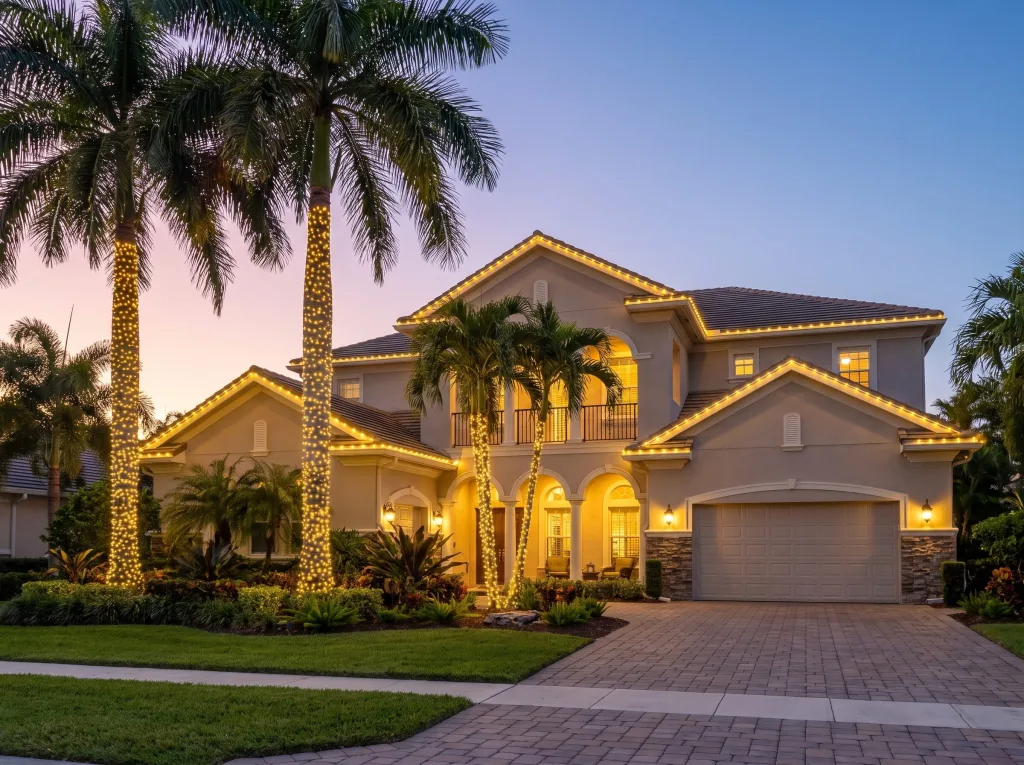
Classic warm white lighting continues to dominate because it reads as elegant, timeless, and easy to pair with any exterior color palette. What’s new in 2026 is the layering technique: instead of a single strand along the roofline, designers are stacking warm white in multiple zones — rooflines, windows, doorways, and landscaping — to create depth rather than a flat outline. The result feels less like “holiday decor” and more like intentional architectural lighting that happens to be festive.
Permanent, Color-Changing LED Systems Are Going Mainstream
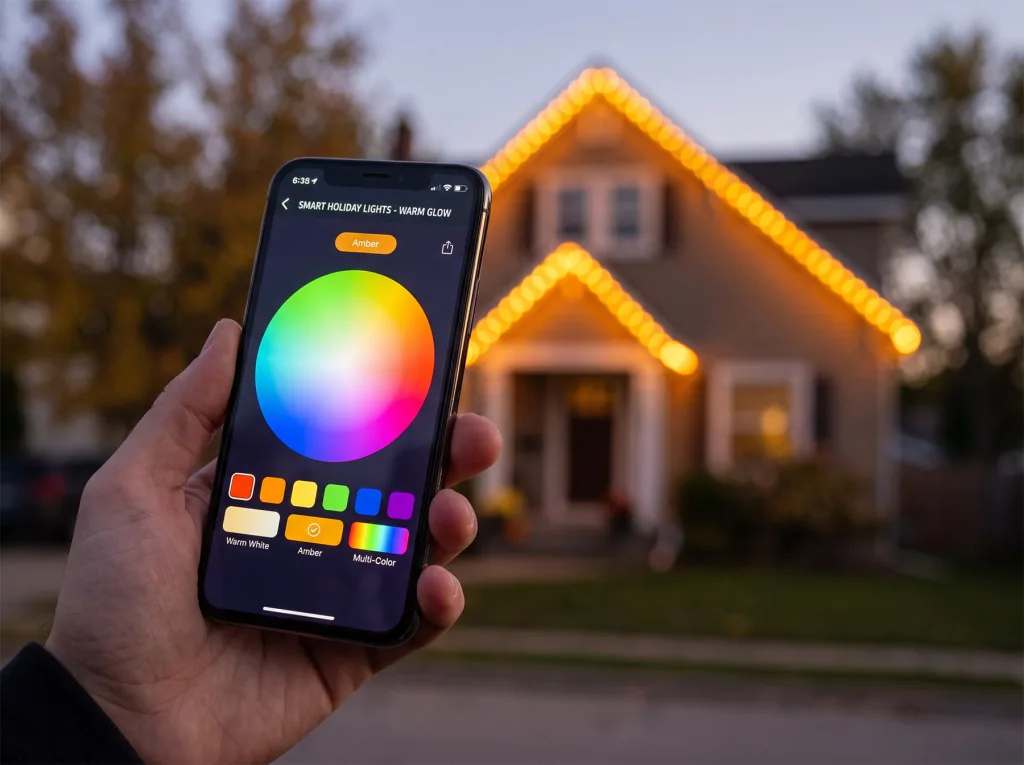
This is the biggest shift we’re seeing this year. Permanent lighting systems — the kind installed once and controlled via app for every holiday, game day, or backyard party — have moved from a luxury novelty to a genuinely popular upgrade. Homeowners like that they can flip from warm white for Christmas to orange and black for Halloween to red, white, and blue for the Fourth of July, all without re-installing a single strand. For South Florida’s climate, where installers are up on ladders less often, that’s a big win on the maintenance side too.
Tropical Meets Traditional
 Tropical Meets Traditional
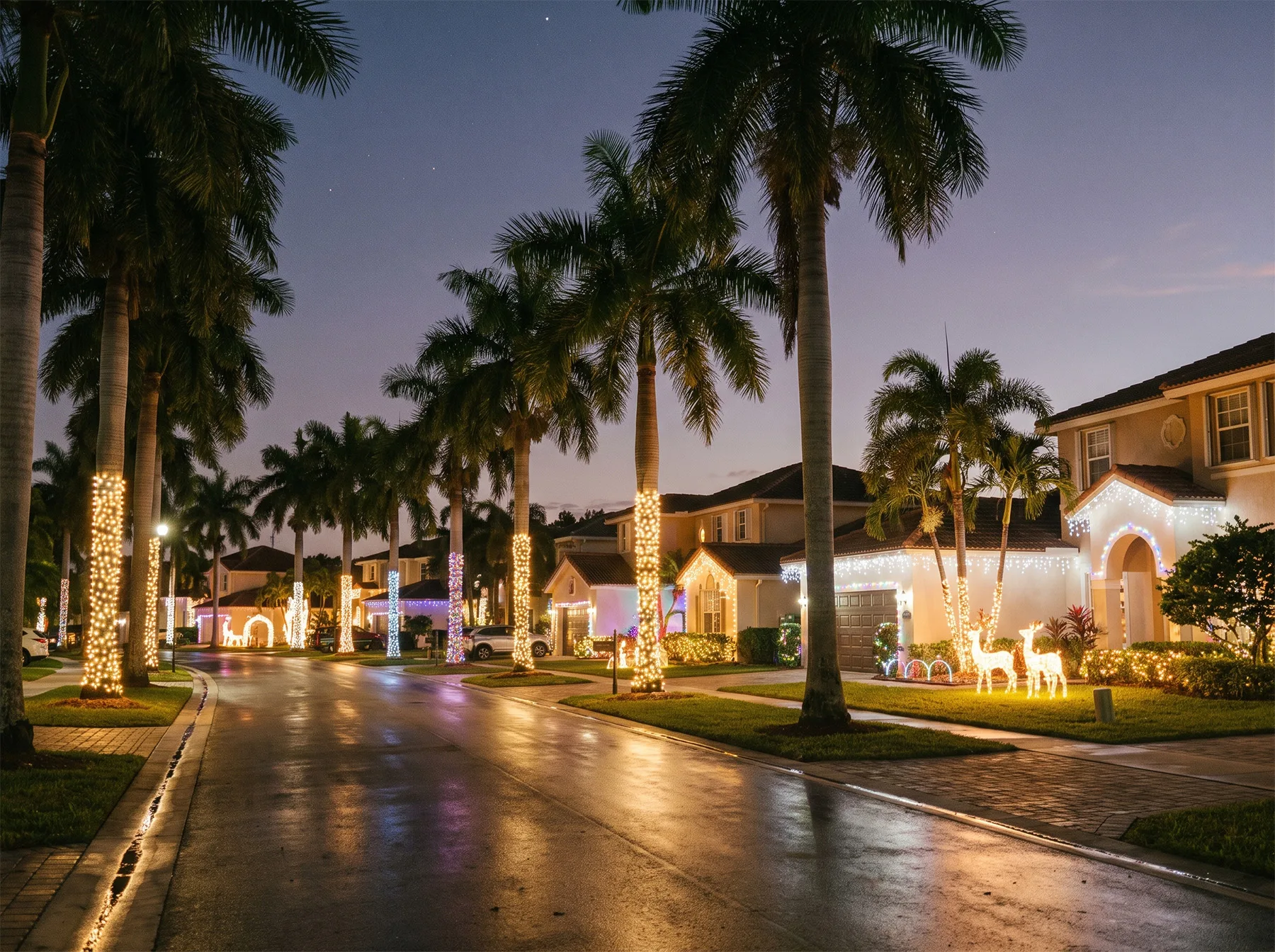
South Florida’s landscape doesn’t look like a New England postcard, and this year’s trend embraces that instead of fighting it. Palm trees wrapped in warm white or icy blue lights, illuminated tropical foliage, and lit palm fronds are showing up more often alongside traditional rooflines and wreaths. The look blends classic holiday cheer with the natural beauty of a South Florida yard — palms, not pines, are the new statement piece.
Oversized, Minimalist Displays
Maximalist inflatable lawns are giving way to fewer, larger, more sculptural pieces: a single oversized lit wreath on a garage door, a dramatic lit archway over the front walk, or one striking tree wrapped floor to canopy. It’s a “less but bolder” approach that photographs beautifully and avoids visual clutter — especially appealing for HOA communities with display guidelines.
Icicle Lights Are Making a Comeback — Reimagined
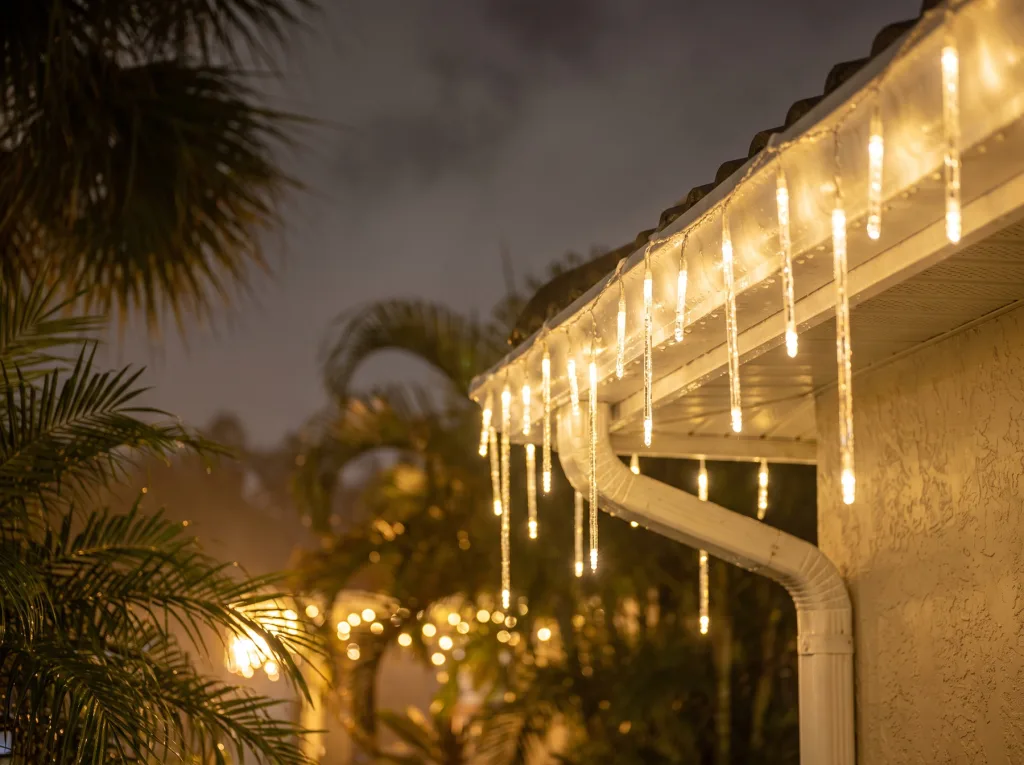
Icicle lights never fully went away, but this year’s version is sleeker: thinner wire, tighter LED spacing, and warmer tones that avoid the harsh blue-white glare of older icicle strands. Paired with a clean roofline, they create that “frozen eave” look without needing an actual winter climate to sell the effect.
Landscape and Pathway Lighting Get More Attention
 Landscape and Pathway Lighting Get More Attention
It’s not just rooflines anymore. Uplighting on trees, lit pathways leading to the front door, and subtly lit shrubs are becoming standard parts of a full display rather than an afterthought. This creates a layered, professional look from the street and extends the “wow factor” beyond just the roofline silhouette.
Sustainability-Minded Choices
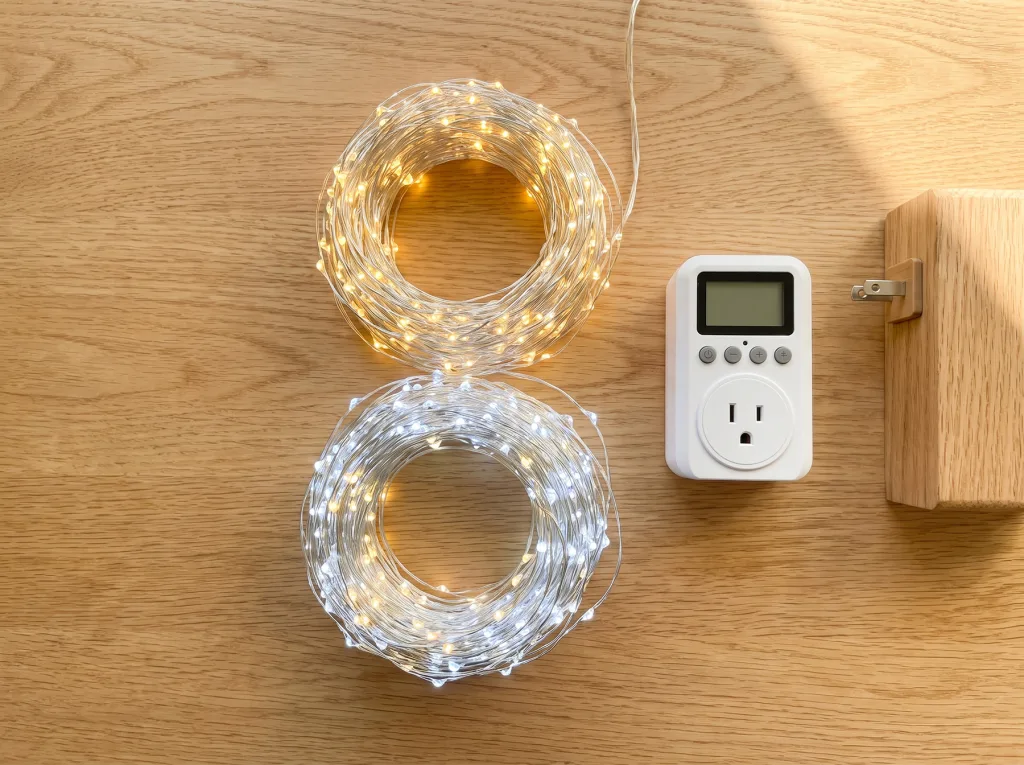
More homeowners are asking about energy-efficient LED options and timers or smart controls that automatically shut lights off late at night. It’s a small trend, but a meaningful one — modern LED displays use a fraction of the electricity older incandescent strands did, so a full house display no longer means a spike in the power bill.
How to Choose the Right Trends for Your Home
With so many options, it helps to narrow things down based on a few practical factors rather than trying to incorporate every trend at once:
- Your home’s architecture. Modern, clean-lined homes tend to suit minimalist, oversized statement pieces, while traditional homes with more architectural detail (columns, arched windows, multiple rooflines) often look best with layered warm white lighting that follows those existing lines.
- Your landscaping. If you have mature palm trees or lush foliage, lean into tropical-inspired lighting rather than trying to disguise it. If your yard is more open, pathway and landscape lighting can add texture that would otherwise be missing.
- How often you’ll use it. If you like decorating for more than just the December holidays — Halloween, the Fourth of July, football season — a permanent color-changing system usually pays for itself in convenience within a season or two.
- HOA or community guidelines. Some South Florida communities have specific rules about display size, lighting hours, or colors. A single bold piece (like a lit archway or wreath) is often easier to get approved than a full multicolor display.
- Budget. Trends like icicle lighting or a single statement tree are relatively affordable ways to feel current without a full system overhaul, while permanent LED installations are a bigger upfront investment that spreads value across the whole year.
Most homeowners end up mixing two or three of these trends rather than committing to just one — for example, warm white rooflines paired with wrapped palm trees and a single oversized wreath tends to hit that balance between cohesive and eye-catching.
Frequently Asked Questions
Do these trends work for smaller homes, or just larger properties?
Most of these trends scale down easily. Layered warm white lighting, a single statement wreath, or wrapped palm trees can look just as polished on a smaller home as a sprawling one — it’s more about proportion and placement than square footage.
Is permanent lighting worth it if I only decorate for Christmas?
It can still make sense. Even if you only use the color-changing features once a year, you eliminate the annual cost and hassle of installation and takedown, and the option to use it for other occasions is there if you change your mind later.
How far in advance should I plan my display if I want to follow these trends?
If you’re hiring a professional, aim to book at least a few weeks before you want lights installed — popular install windows in November and early December fill up quickly. DIY projects should also be planned early so materials are ordered and on hand before the season gets busy.
Bringing These Trends to Your Home
The good news is that most of these trends aren’t about spending more — they’re about spending smarter. A well-planned, professionally designed display using fewer but higher-quality elements (like permanent LED systems or a single statement piece) often looks more polished than a yard packed with mismatched decorations.
If you’re not sure where to start, that’s exactly what a professional holiday lighting company is for. A good installer can walk your property, identify the architectural features worth highlighting, and recommend a display that fits both your home’s style and your budget — without you ever climbing a ladder.
 Ready to Upgrade Your Holiday Display This Year?
 Ready to Upgrade Your Holiday Display This Year?
Whether you’re drawn to permanent color-changing systems, tropical-inspired displays, or a classic warm white look with a modern twist, Let’s Get Lit can help bring your 2026 holiday lighting vision to life. Contact us today for a free consultation and see what a professionally designed display can do for your home.