
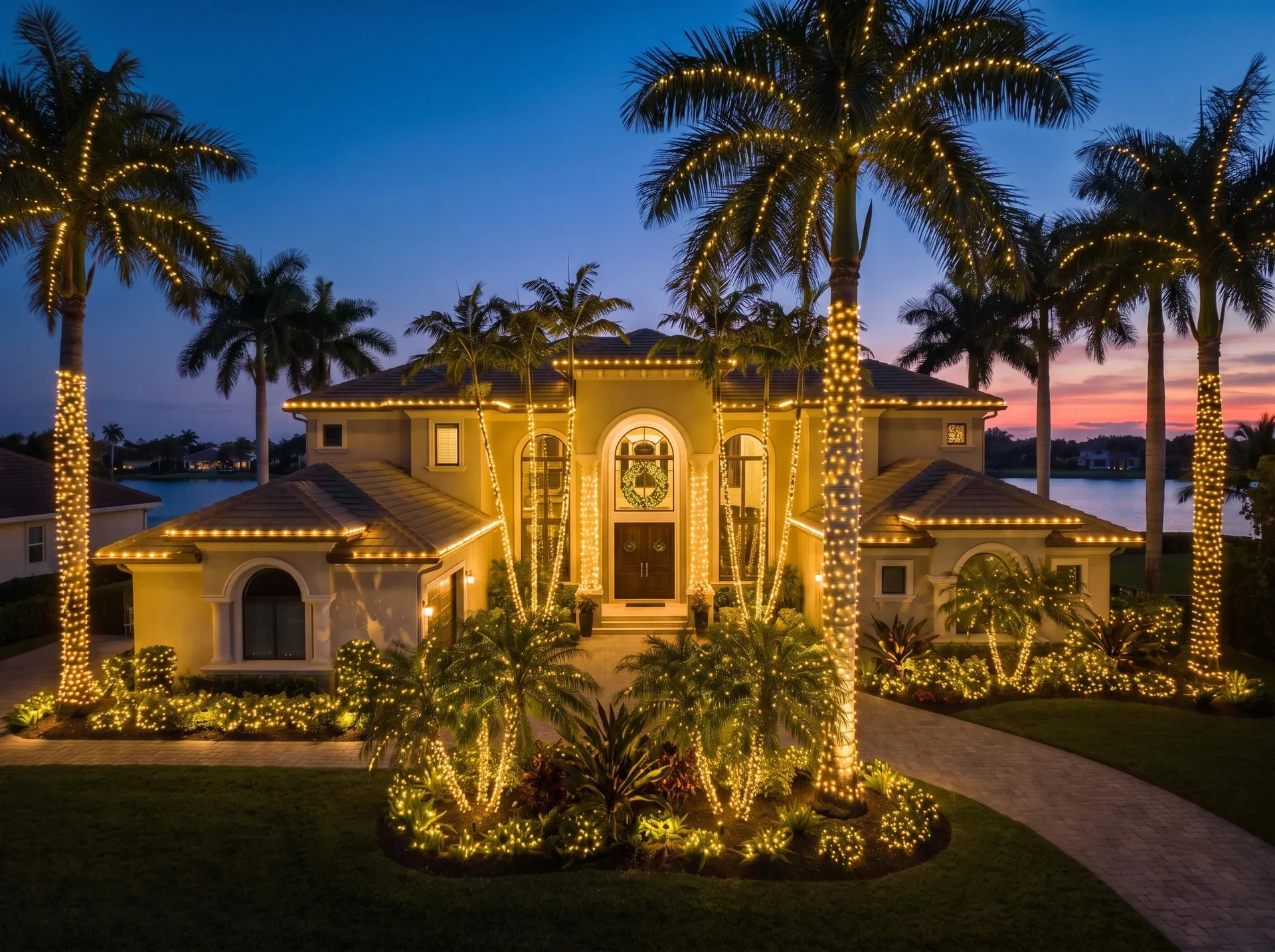
If you grew up watching holiday movies set in snowy New England towns, decorating a South Florida home for the season can feel a little disorienting at first. There’s no snow to reflect the lights, no bare winter trees to string with bulbs, and 80-degree days don’t exactly scream “sleigh bells.” But South Florida homeowners have figured out how to create holiday displays that are just as magical — they just lean into the climate instead of fighting it. Here’s how to do it right.
 Embrace the Palm Trees, Don’t Hide Them
 Embrace the Palm Trees, Don’t Hide Them
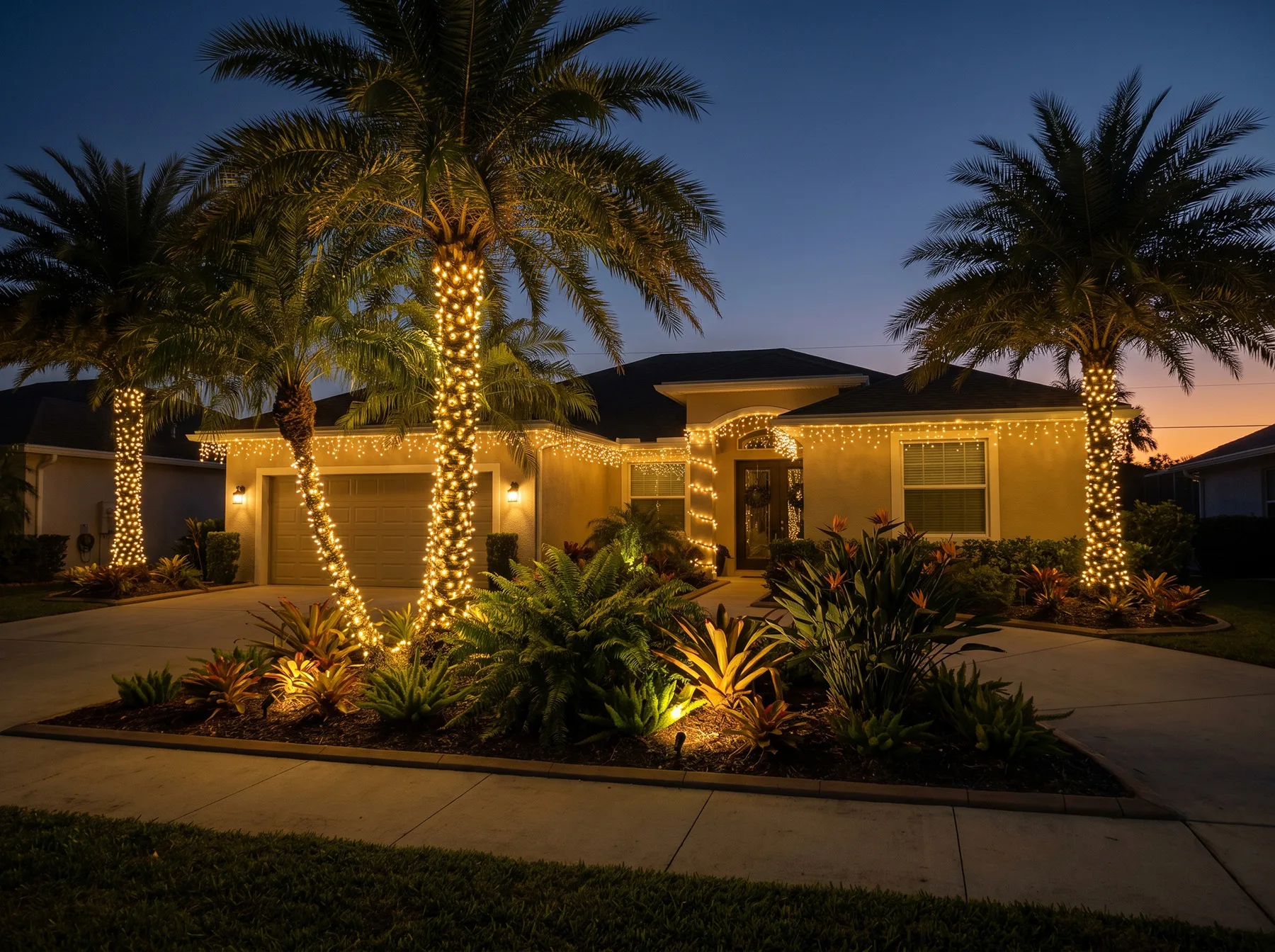
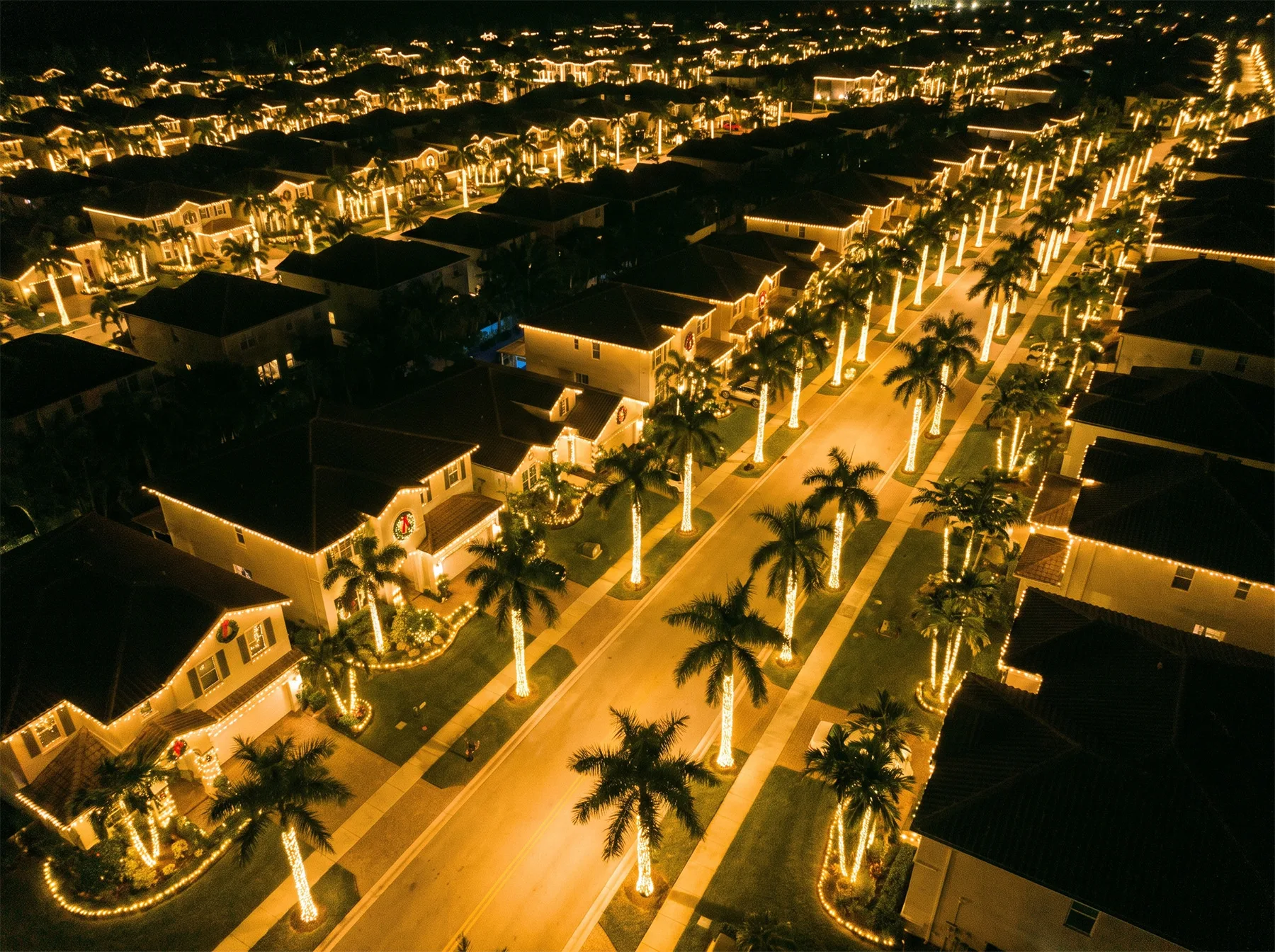
The single biggest mistake homeowners make is trying to force a “northern” holiday look onto a tropical landscape. Instead, treat your palm trees as the centerpiece they already are. Wrapping trunks and fronds in warm white or cool blue LED lights creates a striking visual that pine trees simply can’t replicate — it’s uniquely South Florida, and it photographs beautifully. Uplighting palms from the base is another popular option that adds drama without needing to wrap every frond.
Choose a Color Palette That Works With Your Home’s Exterior
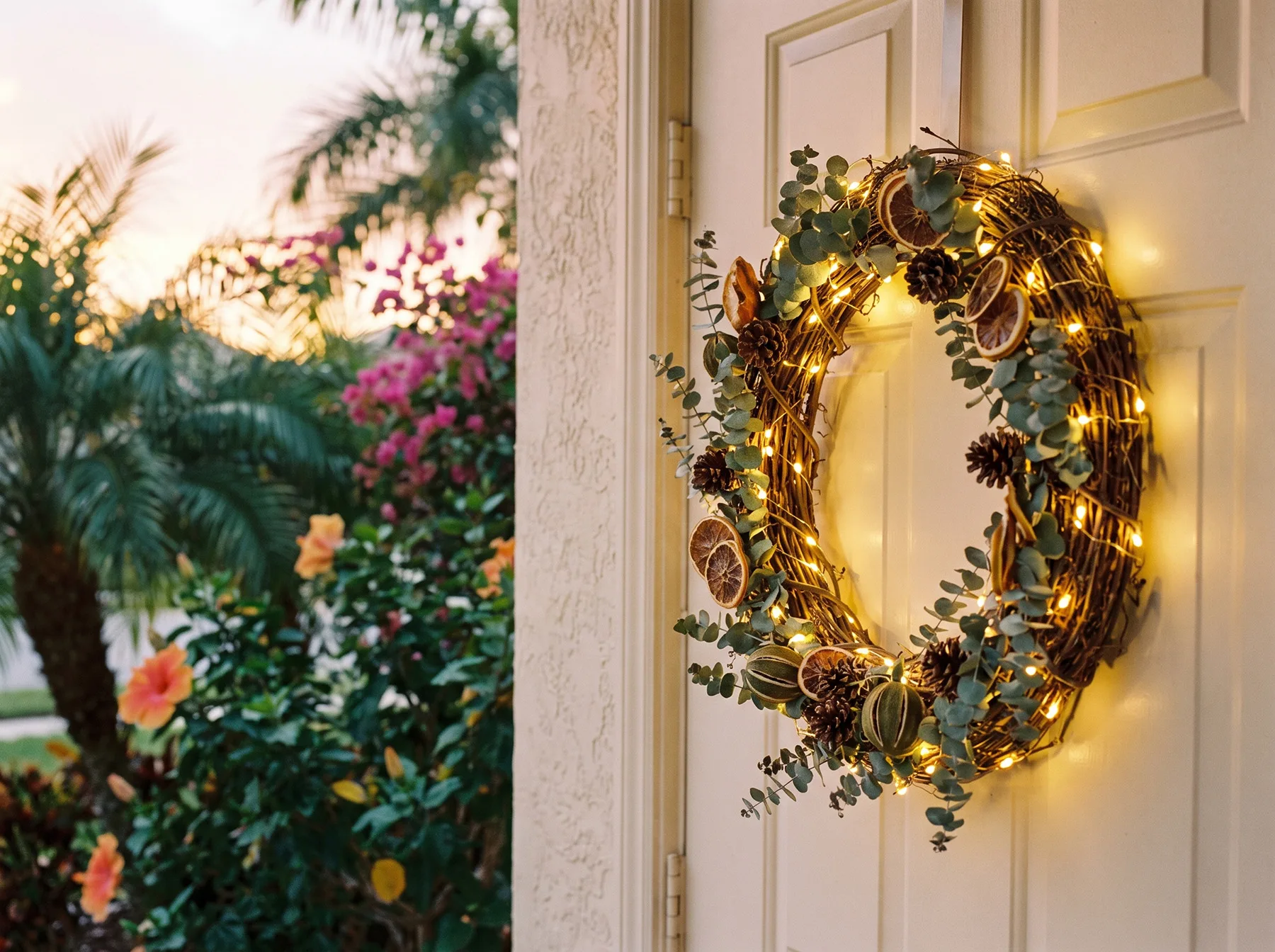
Stucco homes in soft pastels, whites, and earth tones are common throughout Palm Beach, Broward, and Miami-Dade, and bright multicolor lights can sometimes clash with those tones rather than complement them. Warm white, soft gold, and icy blue tend to look most cohesive against South Florida’s typical exterior palette. If you want color, consider using it as an accent — a wreath, a lit archway, or landscape lighting — rather than covering the whole house.
Skip the Snow, Add Texture Instead
 Skip the Snow, Add Texture Instead
Since natural snow isn’t part of the equation, texture becomes the way to create visual interest. Layer lighting at different heights — rooflines, window frames, shrubs, and pathways — rather than relying on one flat strand along the gutter. Adding lit garlands around doorways or porch railings gives the eye more to take in without needing snow-white contrast to do the work.
Design for Warm-Weather Viewing
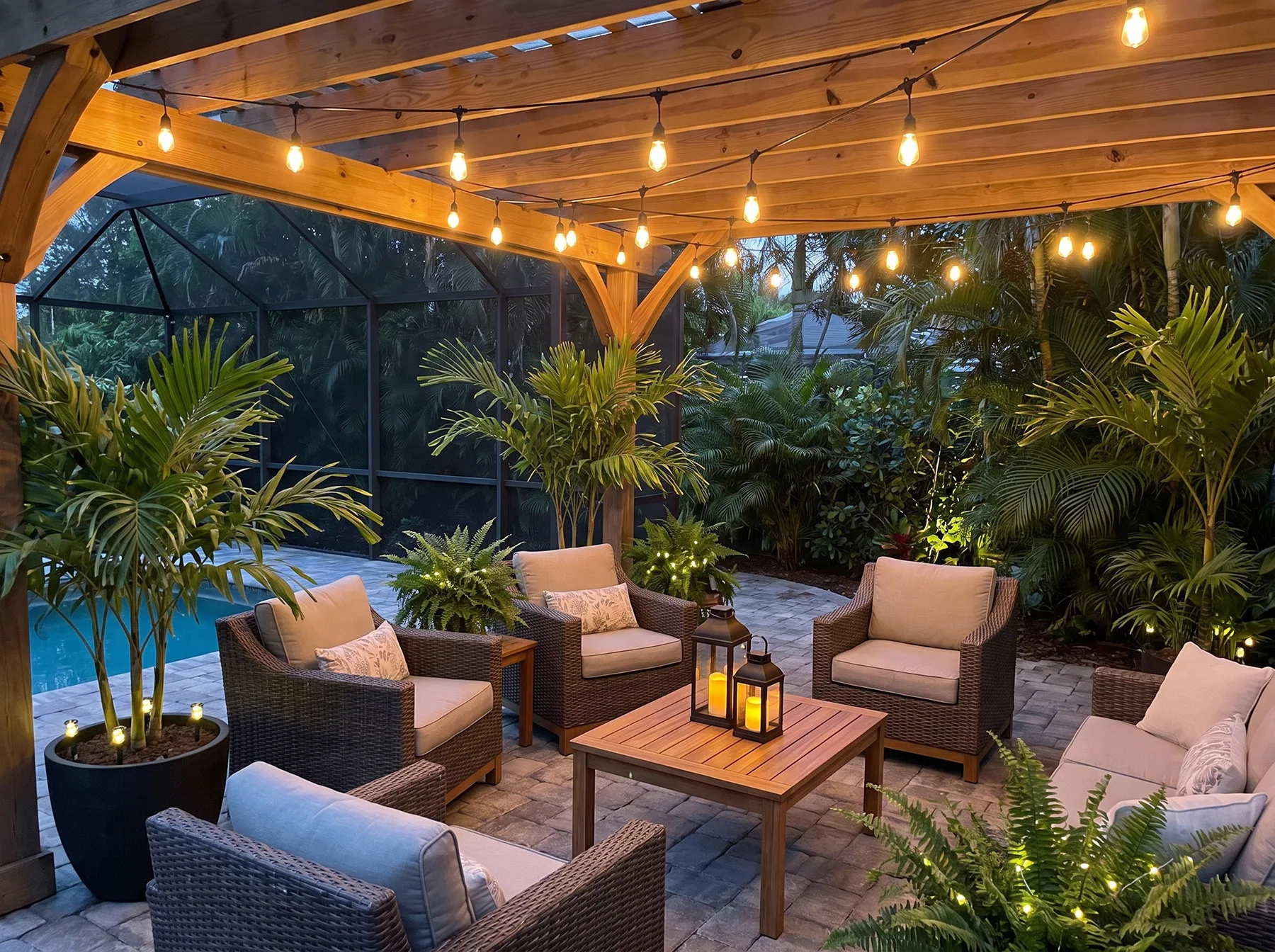
One underrated advantage of the South Florida climate: your neighbors and guests can actually comfortably enjoy your display outside for longer than 90 seconds. That opens the door to features that wouldn’t make sense in a freezing climate — outdoor seating near the display, a lit pathway for evening walks, or a display designed to be enjoyed from a porch with a drink in hand rather than glimpsed from a car window.
Plan Around the Weather, Not Against It
 Plan Around the Weather, Not Against It
South Florida’s holiday season still falls within a period of occasional rain and humidity, so material choice matters. Look for:
- Weatherproof/rated-for-outdoor LED lights with sealed connections
- UV-resistant wiring and clips that won’t degrade quickly in direct sun
- Secure mounting that can handle wind gusts, especially for homes near the coast
This is one of the areas where hiring a professional installer pays off — they know which products actually hold up through a South Florida winter versus ones that will fade or fail by New Year’s.
Don’t Forget the Landscaping
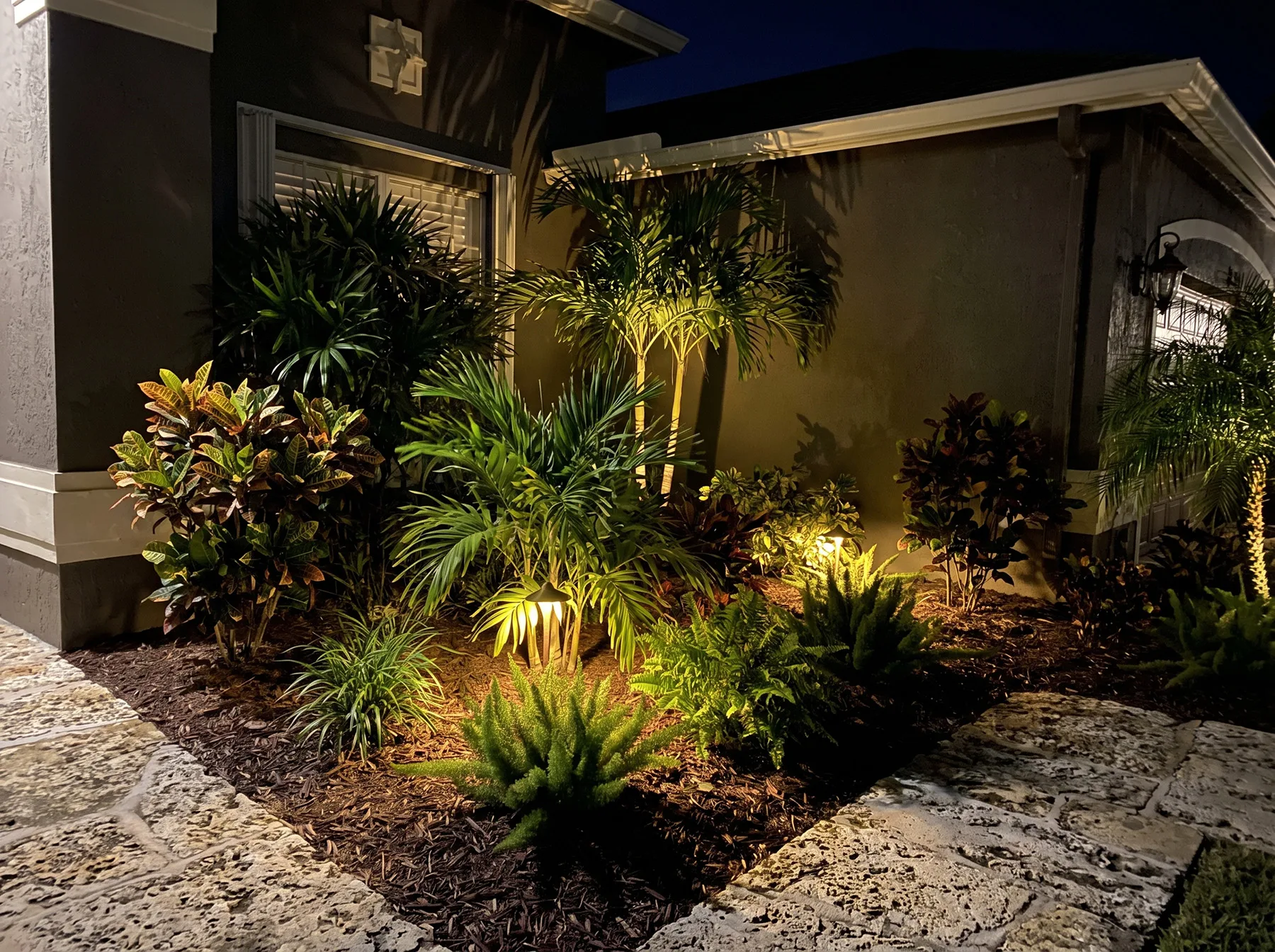
Homes here often have lush, year-round greenery that a lot of colder-climate homes simply don’t have in December. Use it. Uplighting hedges, illuminating garden beds, and lighting up any water features on the property extends your display beyond the house itself and makes the whole property feel intentionally designed rather than just “the house with lights on it.”
Consider Going Permanent
 Consider Going Permanent
Because South Florida homeowners often decorate for more than just Christmas — think Halloween, Fourth of July, and game days — permanent, color-changing LED lighting systems have become especially popular here. Install once, then control the color and schedule from an app year-round. It also means no annual ladder climbing in the heat and humidity, which is a real quality-of-life upgrade.
Let the Warm Weather Be a Feature, Not a Limitation
At the end of the day, South Florida’s holiday season isn’t a lesser version of a snowy one — it’s a different aesthetic entirely, built around palms instead of pines, warm evenings instead of frosty ones, and displays meant to be enjoyed outside rather than admired through a frosted window. Once you stop trying to replicate a snow-globe scene and start designing for the climate you actually live in, the results can be even more striking.
Keeping Your Display Looking Great All Season
 Keeping Your Display Looking Great All Season
South Florida’s warm, humid holiday season is easier on homeowners than a freezing climate, but it does come with its own maintenance considerations:
- Check connections after rain. Even weatherproof-rated lights benefit from a quick visual check after heavy rain to make sure connectors haven’t loosened or filled with water.
- Watch for sun fade on daytime-visible strands. Lights and clips left in direct South Florida sun for weeks can fade faster than in cooler climates — UV-resistant materials hold up noticeably better.
- Secure everything against wind. Coastal breezes and the occasional late-season system can loosen poorly clipped strands. Zip ties and dedicated clips hold up far better than tape or hooks alone.
- Keep an eye on irrigation. Sprinkler systems are common on South Florida lawns, and consistent overspray onto electrical connections can cause problems over time. Position or angle lighting components away from sprinkler heads where possible.
- Plan for humidity, not just rain. Even on dry days, South Florida’s humidity is higher than most of the country’s, so sealed, outdoor-rated connectors matter even when skies are clear.
A few minutes of occasional upkeep goes a long way toward making sure your display still looks sharp on New Year’s Eve, not just opening night.
Frequently Asked Questions
Can I still do an all-white, “snowy” aesthetic even without real snow?
Absolutely. Warm white lighting, white or icy blue accent colors, and lighter-colored decor elements can evoke that classic look — many South Florida homeowners do this successfully by leaning on light color palettes rather than trying to fake actual snow.
Do palm trees need special lights, or can I use the same strands as the roofline?
Standard outdoor LED string lights work fine on palm trunks and fronds, though longer strands designed for wrapping (rather than clipping to a straight edge) tend to drape and wrap more naturally around curved trunks and fronds.
Is it worth hiring a professional for a South Florida-specific display, or can I DIY it?
Both are possible, but a professional familiar with the local climate will know which weatherproof materials actually hold up here, how to secure lighting against wind and rain, and how to work with palm trees and tropical landscaping — details that aren’t always obvious if you’re used to decorating in a different climate.
Want Help Designing Your South Florida Holiday Display?
From palm tree wraps to full architectural lighting, Let’s Get Lit specializes in holiday displays designed specifically for South Florida homes and climate. Reach out today for a free design consultation.