
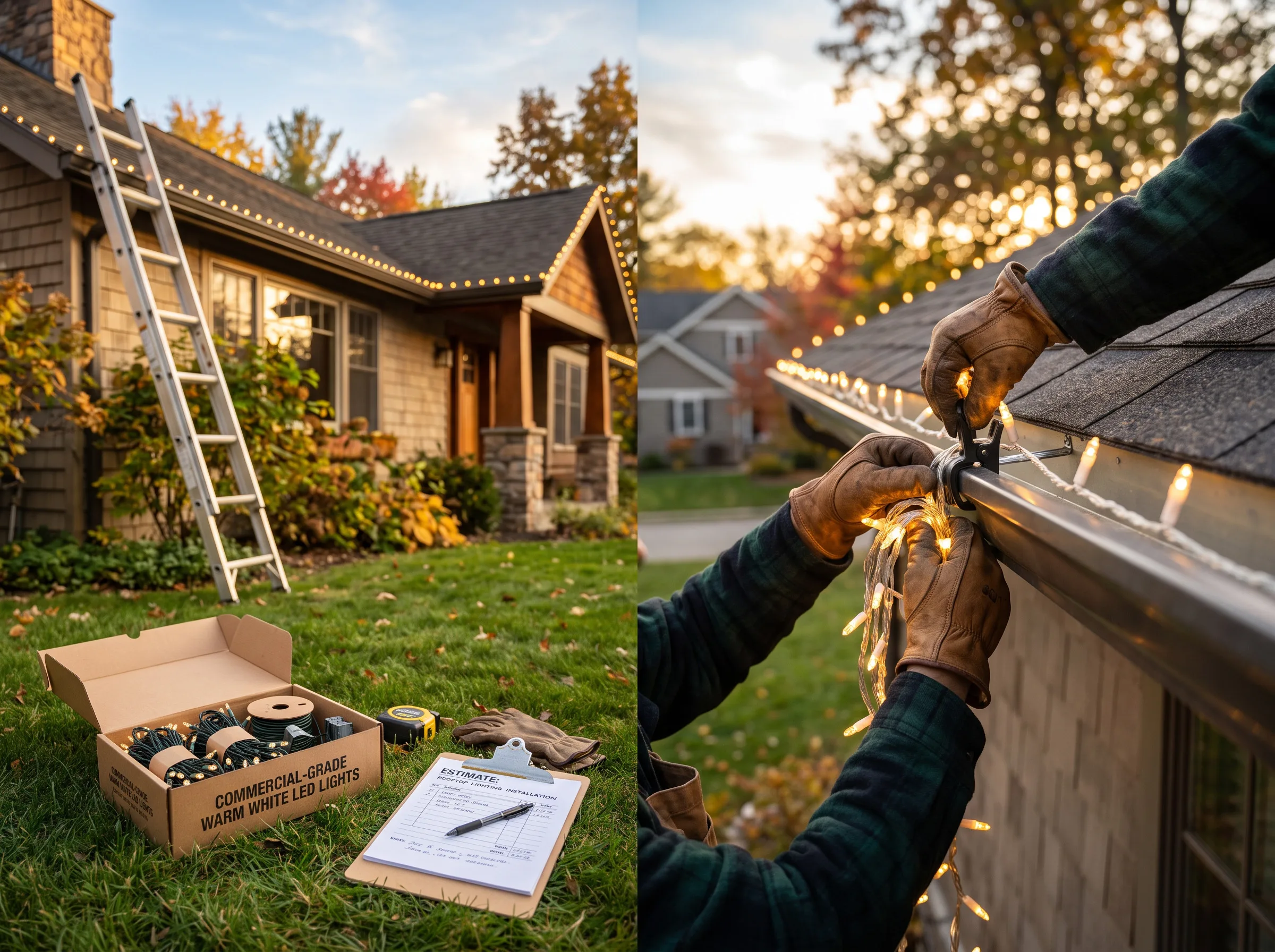
Every fall, homeowners face the same question: grab a ladder and a box of lights from the store, or call in a professional crew? Both routes can result in a beautiful display, but they come with very different trade-offs in cost, time, safety, and long-term value. Here’s an honest, side-by-side look at what each option really involves — so you can decide which one makes sense for your home this season.
 Upfront Cost: DIY Looks Cheaper, But Read the Fine Print
 Upfront Cost: DIY Looks Cheaper, But Read the Fine Print
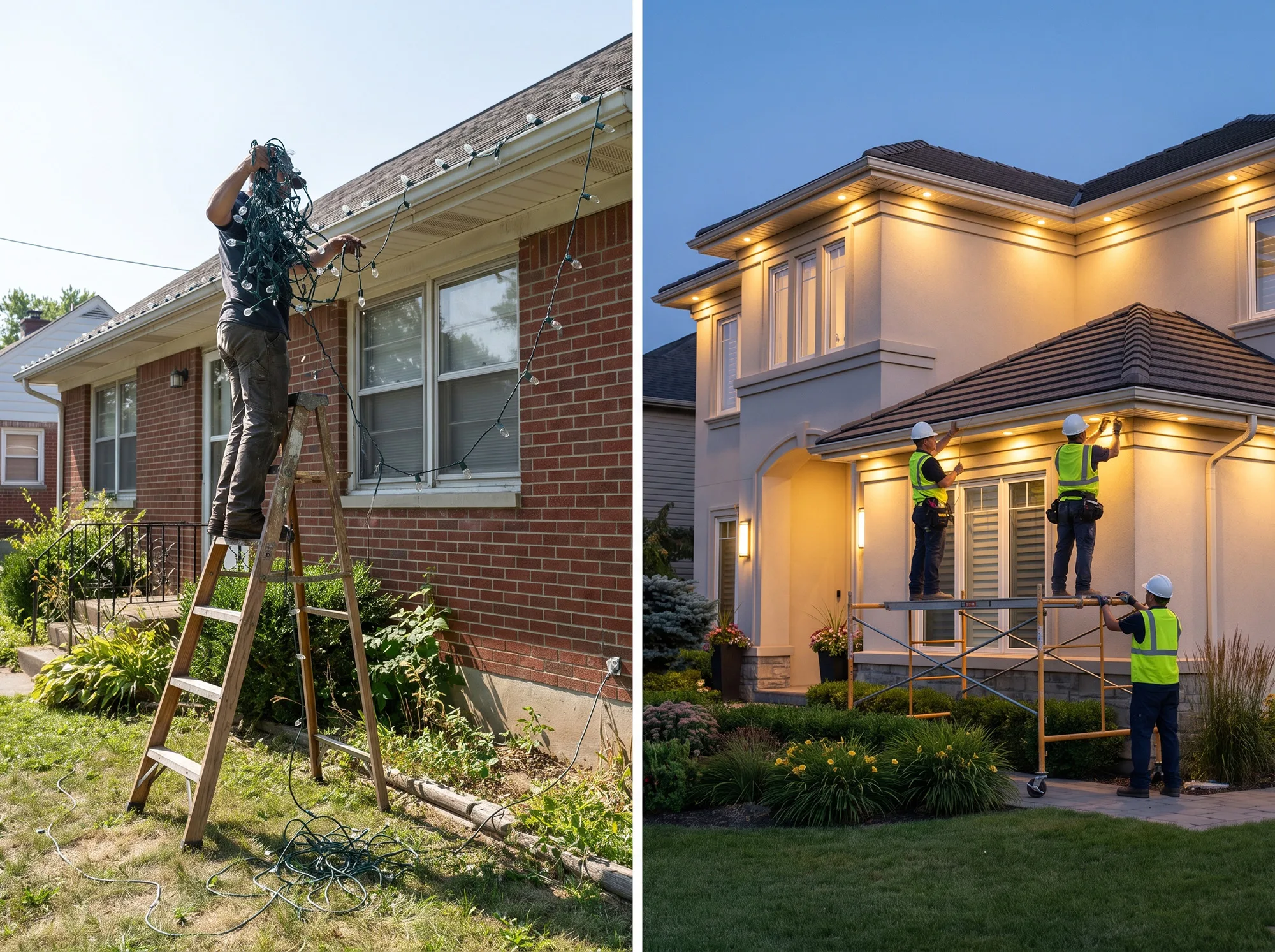
On paper, DIY almost always looks less expensive. A basic set of string lights from a hardware store costs a fraction of a professional installation quote. But that comparison only holds up if you already own a sturdy ladder, safety equipment, extension cords, clips, and timers — and if you don’t run into breakage, returns, or the need for more lights than you originally bought.
Professional installation costs more upfront because it typically includes commercial-grade materials, labor, design planning, and often maintenance and takedown. When you factor in the real cost of DIY materials (many of which need replacing every year or two) against a professional package that often reuses higher-quality materials for multiple seasons, the gap narrows more than most people expect.
Time Investment: The Hidden Cost of DIY
This is where DIY costs homeowners the most, even if it doesn’t show up on a receipt. A single-story home with a moderate display can easily take four to eight hours to plan, untangle, hang, test, and troubleshoot — and that’s before accounting for return trips to the store for more lights, extension cords, or replacement bulbs. Multi-story homes or more elaborate designs can take a full weekend or more.
Professional crews, by contrast, are trained to install a full display in a fraction of that time because they do it daily throughout the season. For homeowners who value their weekends — or simply don’t have a free weekend in November — that time savings alone can justify the cost difference.
 Safety Risk: The Factor Most Homeowners Underestimate
 Safety Risk: The Factor Most Homeowners Underestimate
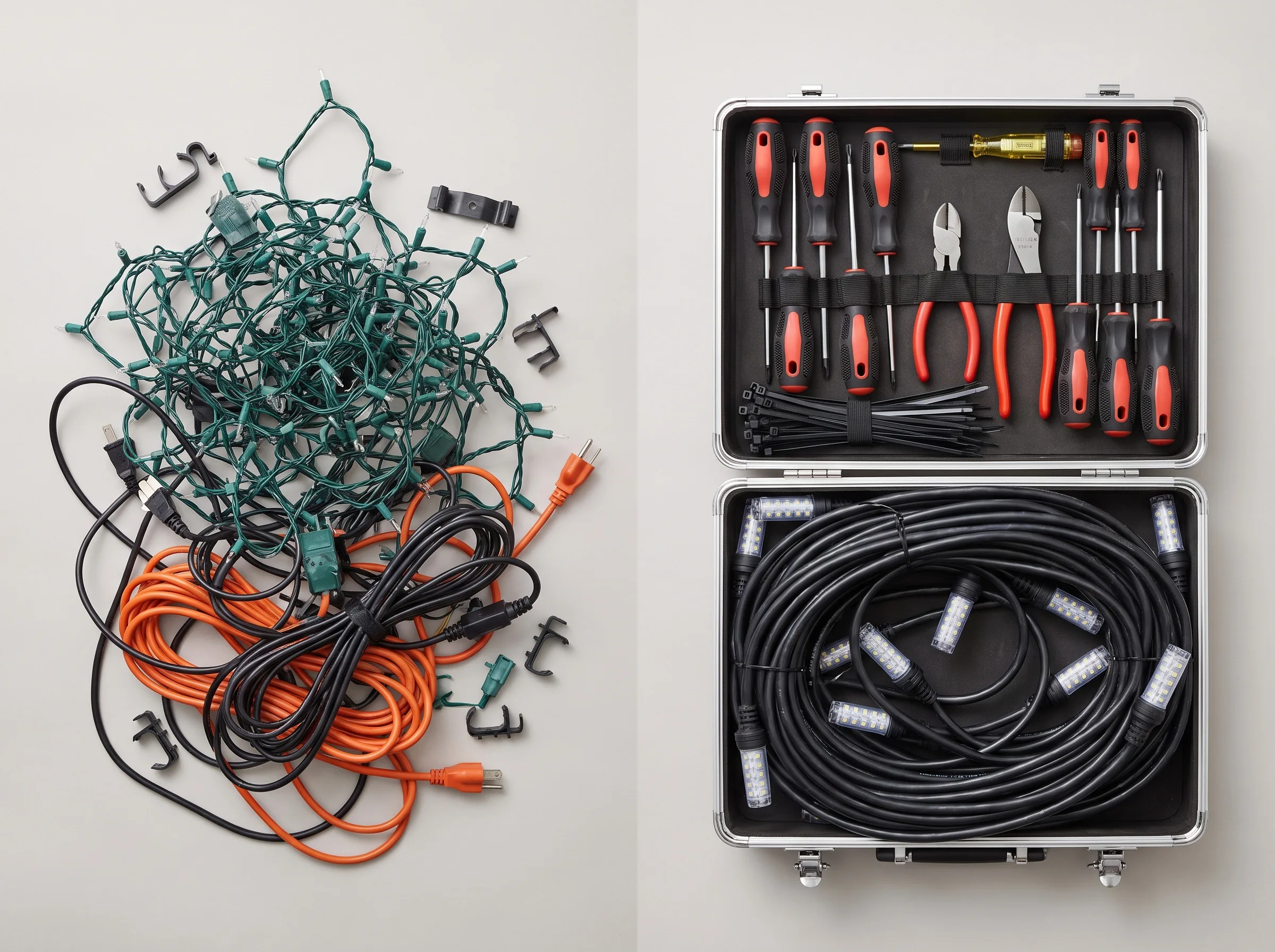
Ladder falls are one of the most common causes of home injury during the holiday season, and roofline lighting is one of the riskier home improvement tasks a homeowner can take on. Wet gutters, unstable footing, and reaching too far from a ladder are all common contributors. South Florida’s occasional rain showers and humidity only add to the slip risk on rooftops and ladders during install season.
Professional installers carry insurance, use proper safety equipment, and are trained specifically for ladder and roof work. This is arguably the single biggest reason homeowners choose to hire a professional even when they’re comfortable with the cost and time investment of DIY — the risk of a fall or injury simply isn’t worth it for many people.
Results: Design Experience Shows
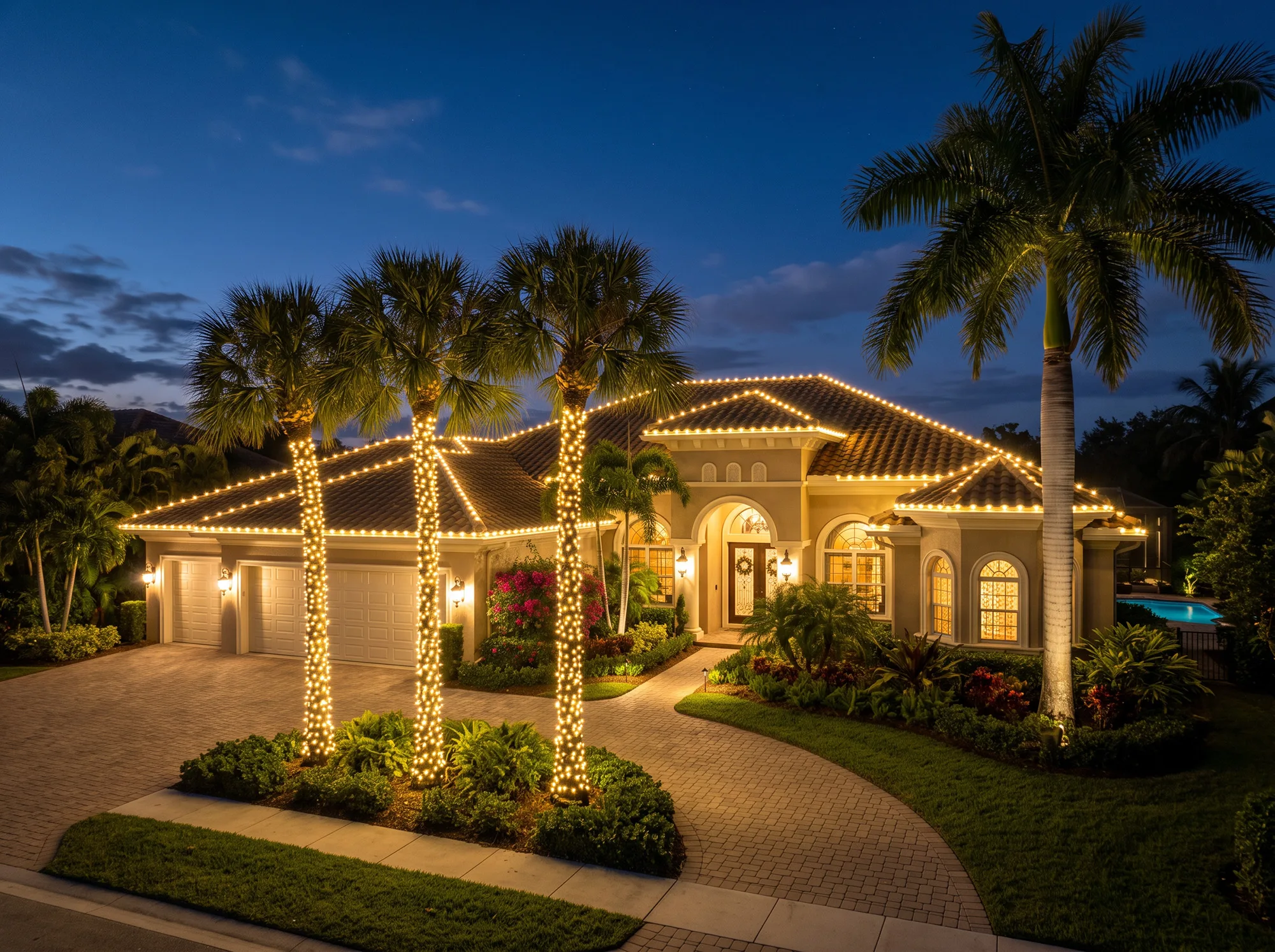
There’s also a noticeable difference in the finished look. Professional installers are trained to plan lighting around a home’s specific architecture — spacing, symmetry, and proportion aren’t guesswork for someone who does it every day. DIY displays can absolutely look great, but they often take a few seasons of trial and error to get spacing, layering, and proportion looking as polished as a professional design gets right the first time.
Maintenance and Takedown: Often the Most Overlooked Difference
 Maintenance and Takedown: Often the Most Overlooked Difference
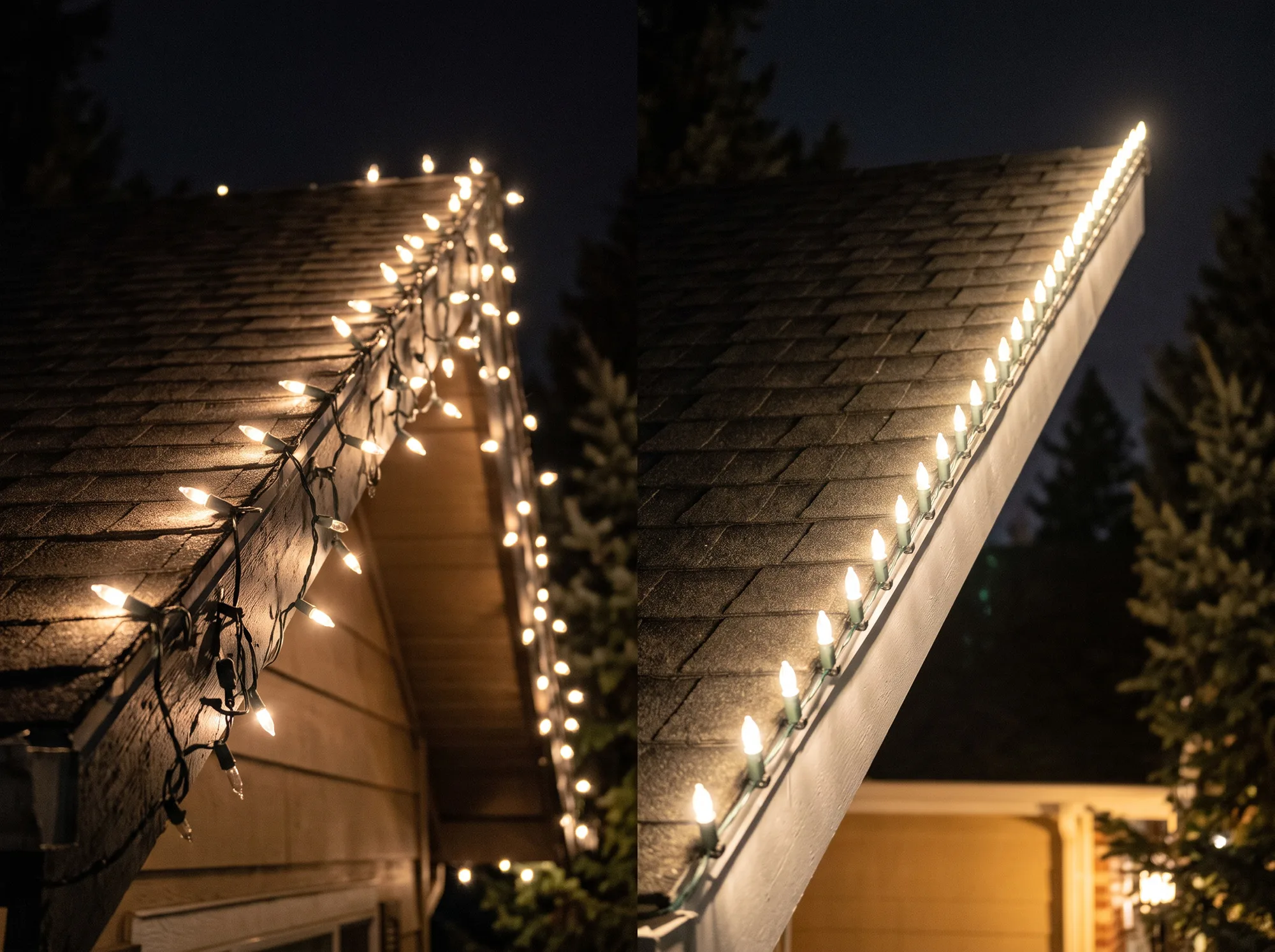
A light strand going dark mid-December is common, and fixing it yourself means climbing back up a ladder to troubleshoot the connection. Many professional packages include maintenance visits during the season, so a burned-out section gets fixed without you lifting a finger.
Takedown is another factor people forget to weigh. DIY takedown means another round trip up the ladder, plus storing (and likely re-tangling) everything until next year. Full-service professional packages typically include takedown and storage of their own materials, meaning your involvement ends the moment the lights come down.
Common DIY Mistakes Worth Knowing About
If you do decide to go the DIY route, a few missteps come up again and again — knowing them ahead of time can save you a trip to the store or a mid-season repair:
- Using indoor-rated lights outdoors. Not all string lights are built to handle rain, humidity, or direct sun for weeks at a time. Always confirm a strand is rated for outdoor use before hanging it.
- Overloading a single outlet or extension cord. Stringing too many light sets together on one circuit is a common cause of tripped breakers or, in worse cases, overheating.
- Skipping a test run before hanging everything. Plugging in and testing lights on the ground first saves the frustration of discovering a dead section after everything is already clipped in place.
- Using tape or hooks instead of proper clips. Tape and improvised hooks tend to fail in wind and heat far faster than dedicated light clips designed for gutters and rooflines.
- Underestimating ladder placement on uneven ground. South Florida yards aren’t always perfectly level, and ladder stability on soft or sloped ground is a leading cause of falls.
None of these mistakes are difficult to avoid once you know about them, but they’re exactly the kind of small details a professional installer handles automatically as part of the job.
So Which One Is Right for You?
There’s no universally correct answer — it depends on what you value most:
- Choose DIY if: you enjoy the hands-on process, have safe and easy roof access, already own the necessary equipment, and have the time to dedicate a weekend (or two) to installation and takedown.
- Choose professional installation if: you want a polished, symmetrical result, don’t want to risk a ladder fall, are short on time, or want the convenience of maintenance and takedown handled for you.
- Consider a hybrid approach: some homeowners DIY smaller accents (like a lit wreath or porch railing) while hiring a professional for roofline and tree lighting, which are the riskiest and most time-consuming parts of a display.
Frequently Asked Questions
 Frequently Asked Questions
Is DIY holiday lighting actually cheaper in the long run?
Not always. Once you factor in replacing lower-quality materials every year or two, the time spent troubleshooting, and the cost of any equipment you need to buy, the gap between DIY and professional pricing is often smaller than it first appears.
How long does a professional installation typically take?
Most residential installations take a crew just a few hours, compared to a full day or weekend for a homeowner tackling the same display solo — largely because professional crews do this work daily throughout the season.
What’s the biggest risk with DIY installation?
Ladder and roof safety. Falls are one of the most common home injuries during the holiday season, and wet or humid conditions — common in South Florida — increase that risk further.
Ready to Skip the Ladder This Year?
If you’d rather enjoy the season than spend a weekend on a ladder, [Let’s Get Lit] handles design, installation, maintenance, and takedown from start to finish. [Get your free quote today] and see the difference a professional installation makes.